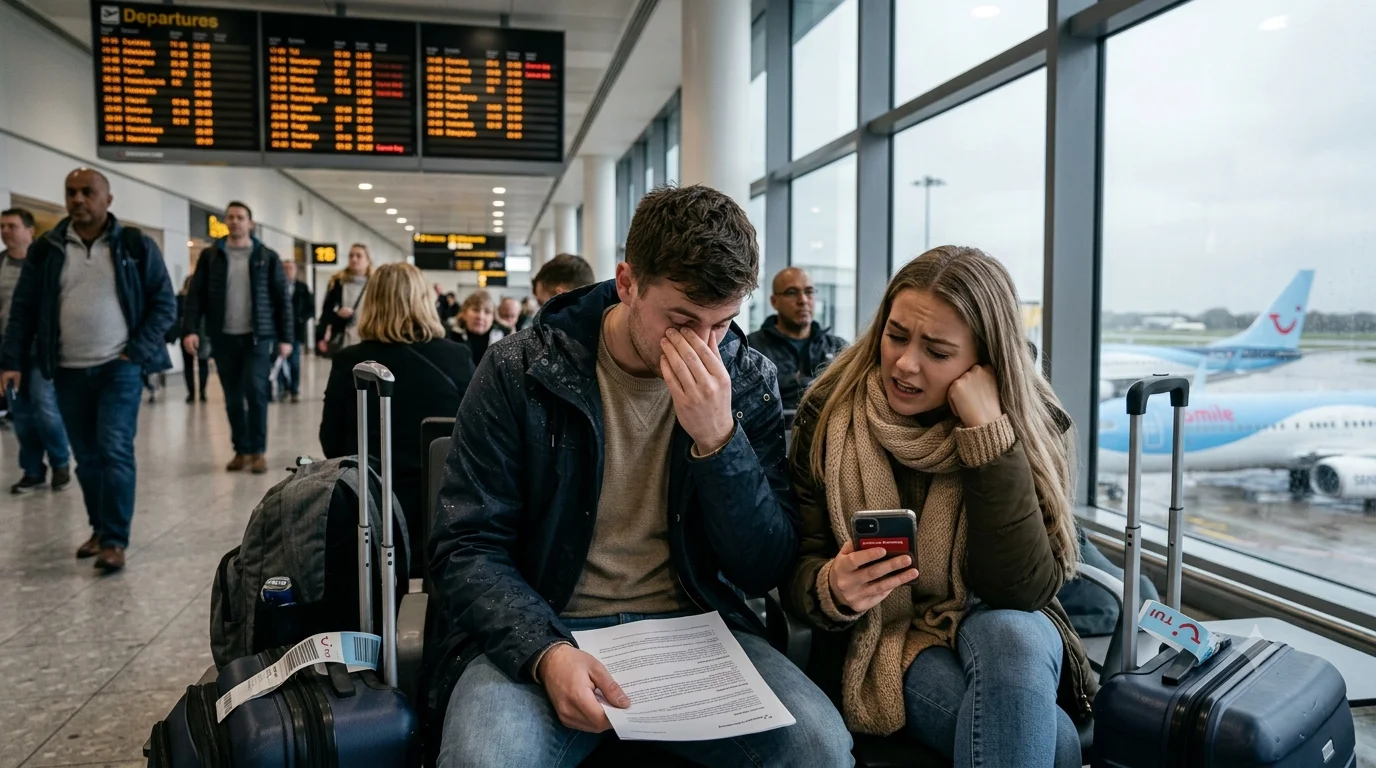
Cancelling a holiday is rarely as simple as pressing a button and receiving all the money back. The TUI cancellation policy depends heavily on what was booked, how long remains before departure, who operates the flight and why the holiday is being cancelled.
For a standard TUI package holiday that includes a TUI flight, cancellation charges currently start with the loss of the deposit when cancellation takes place at least 70 days before departure.
The charge then rises in stages, reaching 100% of the holiday price when the booking is cancelled within 14 days of travel.
There are important exceptions. A traveller may have stronger refund rights if TUI cancels the holiday, makes a significant change or unavoidable and extraordinary circumstances seriously affect the destination or the journey there.
There are also separate rules for flight-only bookings, hotel-only bookings and some holidays involving other airlines.
So, how exactly does the TUI cancellation policy work in 2026, and how much could someone lose by cancelling?
What Is the TUI Cancellation Policy in 2026?
TUI allows customers to cancel holidays before departure, but cancellation does not automatically mean that all money already paid will be refunded.
For package holidays involving a TUI flight, the amount charged generally depends on the number of days between the date TUI is notified of the cancellation and the scheduled departure date.
Under TUI’s current published cancellation terms, the charges are:
| When the Holiday Is Cancelled | TUI Cancellation Charge |
| 70 days or more before travel | Loss of full deposit |
| 69 to 63 days before travel | 30% of total holiday price |
| 62 to 49 days before travel | 50% of total holiday price |
| 48 to 29 days before travel | 70% of total holiday price |
| 28 to 15 days before travel | 90% of total holiday price |
| 14 to 0 days before travel | 100% of total holiday price |
These percentages apply to the total booking price rather than simply the outstanding balance.
TUI also states that the deposit is non-refundable even where the cancellation charge calculated using the percentage above would otherwise be less than the deposit.
Customers should therefore check the precise conditions attached to their booking before cancelling, particularly where scheduled flights, special tours or other non-standard arrangements are involved.
How Much Does It Cost to Cancel a TUI Holiday?
The easiest way to understand TUI cancellation fees is to look at an example.
Suppose a TUI package holiday costs £2,500 in total.
The approximate cancellation cost could look like this:
| Cancellation Timing | Percentage Charged | Example Charge on £2,500 Holiday |
| 70+ days before departure | Full deposit | Depends on deposit |
| 69–63 days | 30% | £750 |
| 62–49 days | 50% | £1,250 |
| 48–29 days | 70% | £1,750 |
| 28–15 days | 90% | £2,250 |
| 14–0 days | 100% | £2,500 |
This shows why cancelling as soon as it becomes clear that the holiday cannot go ahead can make a substantial financial difference.
Waiting from 50 days before departure until 45 days before departure, for example, could move the booking from a 50% cancellation charge to a 70% charge.
The actual amount can vary where the booking contains additional services or non-refundable components.
Can You Cancel a TUI Holiday and Get a Full Refund?
Sometimes, but simply changing one’s mind will not normally qualify for a full refund.
Where the traveller voluntarily cancels a holiday that can still go ahead as booked, TUI’s normal cancellation charges will generally apply.
A full refund may be possible in circumstances such as:
- TUI cancelling the package holiday.
- TUI making certain significant changes that the traveller does not accept.
- Unavoidable and extraordinary circumstances at the destination significantly affecting the holiday.
- Unavoidable and extraordinary circumstances significantly affecting transport to the destination.
The distinction between choosing not to travel and being legally entitled to cancel without a fee is therefore important.
For instance, being worried about travelling does not automatically create a right to a full refund. The circumstances must meet the relevant contractual or legal threshold.
Travellers following changes in government rules and other developments may also find it useful to monitor broader UK economy and policy updates before making costly decisions.
What Happens If TUI Cancels the Holiday?
The position is different when TUI cancels a package holiday rather than the customer choosing to cancel.
TUI states that customers will not have to pay cancellation fees where it cancels a booking, such as because a hotel closes or a flight is cancelled.
UK package travel law also provides important protections where a package organiser terminates a qualifying package.
Depending on the circumstances, the traveller may be offered a refund or an alternative/replacement holiday.
Where a refund is legally due following termination of a package under the Package Travel and Linked Travel Arrangements Regulations, it must generally be provided without undue delay and within 14 days.
Whether additional compensation is payable is a separate question and depends on why the cancellation happened. Events outside the organiser’s control can affect compensation rights even where the customer remains entitled to a refund.
What Happens If TUI Makes a Major Change to the Holiday?
A cancellation is not the only situation that can give customers additional rights.
TUI may occasionally have to make a significant change to a package before departure.
Its current booking terms give examples including certain substantial changes to:
- The destination.
- Accommodation standard.
- Flight timing.
- UK departure airport.
Where TUI makes a qualifying major change, the customer may generally be given options that can include accepting the revised arrangements, accepting an available replacement holiday or cancelling and receiving a refund.
The exact options and any compensation depend on the nature and timing of the change.
Customers should therefore read any change notification carefully rather than immediately cancelling the holiday through the normal cancellation process. Cancelling voluntarily before understanding the options offered could complicate matters.
Can You Cancel a TUI Holiday Because of War, Natural Disasters or Serious Problems?
UK package travel legislation provides a specific right to terminate a package without paying a termination fee where unavoidable and extraordinary circumstances occur at the destination or its immediate vicinity and significantly affect either the performance of the package or the carriage of passengers to the destination.
Examples can potentially include serious events such as:
- War or major security incidents.
- Natural disasters.
- Serious disease outbreaks.
- Significant disruption affecting travel to the destination.
However, the existence of a problem somewhere in a country does not automatically mean every holiday to that country can be cancelled for free.
The location, severity of the event and its actual impact on the booked holiday must be considered.
Foreign, Commonwealth & Development Office travel advice can be particularly important evidence, although government guidance has previously stressed that FCDO advice is not necessarily the only factor considered.
Does TUI Have a 14-Day Cooling-Off Period?
This is one of the biggest areas of confusion surrounding the TUI cancellation policy.
Someone who buys many products or services online may be familiar with the 14-day consumer cooling-off period. That can lead travellers to assume they have 14 days after booking a holiday to cancel without charge.
That assumption can be expensive.
The standard distance-selling cancellation rules do not generally apply to package holidays in the same way they apply to many ordinary online purchases.
GOV.UK specifically lists package holidays and passenger travel tickets among the exceptions to the standard distance-selling rules.
Therefore, booking a TUI holiday online does not in itself mean the customer automatically receives a 14-day change-of-mind period with a full refund.
The cancellation conditions attached to the holiday can begin to matter as soon as the booking is confirmed.
How Can Someone Cancel a TUI Booking?
For holidays booked directly through the TUI website, customers can use their TUI Customer Account or Manage My Booking for many bookings.
TUI currently allows eligible online customers to use these services to perform actions including viewing booking details, changing parts of the holiday and cancelling the booking.
However, not every reservation can be managed online.
TUI says customers generally need to contact the company directly for bookings such as:
- Flight-only bookings.
- Ski holidays.
- Lakes and Mountains holidays.
- Twin-centre holidays.
- Group bookings.
- Weddings abroad.
- Hotel-only bookings.
- Some packages involving flights operated by another airline.
Customers who booked in a TUI shop should contact the relevant store.
If the holiday was booked through another travel agency or company, the traveller generally needs to return to that agent rather than cancelling directly with TUI.
Once a booking has been cancelled, TUI says customers should expect a cancellation invoice within 14 days.
Does the Same Cancellation Policy Apply to TUI Flight-Only Bookings?
No.
The widely quoted TUI cancellation table does not necessarily apply to every product sold by TUI.
TUI specifically states that cancellation charges are different where someone has booked only a flight or only a hotel.
That means someone with a flight-only booking should not calculate their refund using the package-holiday percentage table and assume the result is correct.
The applicable booking conditions need to be checked instead.
This distinction matters because package holidays receive a specific set of statutory protections under UK package travel legislation that may not apply in exactly the same way to standalone travel services.
Does the Same Policy Apply to TUI Hotel-Only Bookings?
Again, not necessarily.
Hotel-only bookings have separate cancellation conditions.
The amount refunded can depend on the accommodation rate, supplier conditions, booking type and cancellation timing.
Some accommodation prices may include more flexible cancellation terms, while other arrangements can become non-refundable.
Travellers should therefore look at the confirmation documents associated with the individual booking rather than relying solely on general information about TUI package holidays.
What Happens to a TUI Deposit When a Holiday Is Cancelled?
The deposit is particularly important.
For the standard TUI package cancellation structure, cancelling 70 days or more before departure normally results in the loss of the full deposit.
TUI also says the deposit remains non-refundable even where the percentage-based termination charge would otherwise produce a lower amount.
This prevents customers from assuming that cancelling early necessarily means receiving the entire amount already paid back.
The booking confirmation should state the relevant deposit amount.
What Happens If the Holiday Was Booked With a TUI Low Deposit?
A low-deposit offer can create another surprise.
Paying a smaller amount initially does not necessarily mean that smaller payment represents the customer’s entire cancellation liability.
TUI states that where a holiday was booked under a Low Deposit Offer, the full deposit shown on the confirmation invoice becomes payable upon cancellation.
For example, imagine a customer has paid only £100 under a promotional low-deposit arrangement but the contractual full deposit shown on the booking is £500.
Cancelling may mean the remaining £400 deposit still becomes payable.
Anyone considering cancelling a low-deposit holiday should therefore check the confirmation invoice before assuming that only the amount already paid can be lost.
Are TUI Extras Refunded After Cancellation?
Not always.
TUI warns that additional facilities and transport options can be non-refundable, either partly or completely.
These could potentially include certain extras added to the holiday.
Where an extra is non-refundable, its cost can be added to the normal cancellation charge.
That means two customers cancelling holidays with the same basic package price may face different final cancellation costs if one has purchased substantial extras.
The individual confirmation documents provide the best starting point for checking what was purchased and whether separate conditions apply.
Can Travel Insurance Cover TUI Cancellation Fees?
Potentially.
Travel insurance can be extremely important when the reason for cancellation is something unexpected such as illness, injury or another insured event.
A traveller might still technically owe TUI a cancellation charge while being entitled to recover some or all of that loss from an insurer.
That does not mean every reason for cancellation will be covered.
Policies frequently contain:
- Specific covered cancellation reasons.
- Medical exclusions.
- Excesses.
- Limits on claims.
- Requirements concerning when insurance was purchased.
- Rules relating to existing medical conditions.
The policy wording should therefore be checked before cancelling.
TUI itself advises customers to review their travel insurance where unforeseen circumstances such as illness prevent travel.
Can One Passenger Be Removed Without Cancelling the Whole TUI Holiday?
In many cases it may be possible to remove a passenger rather than cancelling the entire booking, but the financial result can be more complicated than simply subtracting that traveller’s share.
TUI warns that removing a person from the booking can cause the overall holiday price to increase.
This can happen because holiday pricing may depend on factors such as room occupancy, per-person discounts and the number of travellers sharing accommodation.
Customers should therefore obtain the revised price before deciding whether removing one traveller is financially better than making another type of amendment.
Is Changing a TUI Holiday Cheaper Than Cancelling It?
Sometimes.
Before cancelling completely, travellers can check whether TUI allows the booking to be amended.
Depending on the booking and how long remains before travel, possible amendments may include changes to:
- Travel dates.
- Accommodation.
- Room type.
- Flight time.
- Passenger names.
- Board basis.
- Holiday duration.
However, an amendment is not automatically cheaper.
Some changes attract amendment fees, while particular changes close to departure can be treated as cancellations under TUI’s booking conditions.
Travellers should compare both options before confirming anything.
The important figure is the total financial effect, including amendment fees, price differences and any non-refundable components.
What Should Someone Check Before Cancelling a TUI Holiday?
A cancellation can involve hundreds or even thousands of pounds, so it is worth checking the figures before confirming it.
Travellers should establish:
- What Type of Booking They Have – Package, flight-only, accommodation-only or another arrangement.
- How Many Days Remain Before Departure – This determines the standard package cancellation percentage.
- The Full Deposit Amount – Particularly important for low-deposit bookings.
- Whether Any Extras Are Non-Refundable – These can increase the cost.
- Whether an Amendment Is Possible – Changing the booking may cost less than cancelling.
- Whether Travel Insurance Applies – An insurer may cover qualifying cancellation losses.
- Why the Holiday Is Being Cancelled – The reason can affect statutory and contractual rights.
- Whether TUI Has Made Any Changes – A major alteration may give stronger cancellation rights.
It is also sensible to consider the wider cost of rearranging a trip. For example, travellers driving significant distances as part of a holiday may want to check the cost of charging an electric car when comparing the total cost of alternative travel plans.
More broadly, household and travel decisions often need to be considered alongside changing living costs, which is why iBusiness Magazine’s finance and investment coverage can be useful when planning larger expenses.
Has the UK TUI Cancellation Law Changed in 2026?
There has been a legislative development worth distinguishing from the rules currently applying to travellers.
The Package Travel and Linked Travel Arrangements (Amendment) Regulations 2026 have been made, but their stated commencement date is 6 April 2027.
They therefore do not replace the current package travel framework for TUI holidays being cancelled in August 2026.
The amendments primarily change areas such as the treatment of linked travel arrangements and organiser redress.
For current TUI customers, the important point is straightforward: the existing cancellation terms and the package-travel rights currently in force remain the relevant starting point.
That date distinction is particularly important when reading travel information online, because an article discussing a new 2026 law may incorrectly give the impression that all of its provisions already apply.
How Can Travellers Reduce the Cost of Cancelling?

The first practical step is to act quickly.
Because TUI’s cancellation percentage increases as departure approaches, delaying the decision can significantly increase the cost.
Someone who knows they definitely cannot travel should compare the available options before moving into a more expensive cancellation band.
They can also consider whether:
- Another eligible person can take the booking.
- The holiday can be changed rather than cancelled.
- Travel insurance covers the reason.
- TUI has made a change that affects cancellation rights.
- Extraordinary circumstances at the destination may be relevant.
Travellers should keep copies of confirmation emails, booking documents, cancellation invoices and communications with TUI or their travel agent. These may be needed for an insurance claim or if the amount refunded is later disputed.
What Is the Most Important Thing to Know About the TUI Cancellation Policy?
The most important point is that there is no single TUI cancellation charge that applies to every booking.
For standard package holidays using TUI flights, the cancellation cost currently increases as departure approaches:
70+ days = deposit → 30% → 50% → 70% → 90% → 100% within 14 days.
But the position can be different for flight-only bookings, hotel-only bookings, scheduled airfares, special arrangements and cancellations caused by serious circumstances at the destination.
A customer should therefore check the booking confirmation and current TUI terms before confirming a cancellation.
The difference between cancelling voluntarily and having a statutory or contractual right to terminate without a fee can be worth thousands of pounds.
Frequently Asked Questions
Can I cancel my TUI holiday and get my deposit back?
Normally not when the customer simply chooses to cancel. TUI states that the full deposit is lost when a qualifying package holiday is cancelled 70 days or more before travel. Different rules may apply where the traveller has a legal right to cancel without a termination fee.
What is the TUI cancellation fee 60 days before departure?
Under TUI’s current package-holiday cancellation scale, cancelling between 62 and 49 days before travel normally results in a charge equal to 50% of the total holiday price.
What is the TUI cancellation fee 30 days before departure?
A cancellation 30 days before travel falls within the 48-to-29-day band, which currently carries a charge of 70% of the total booking price for the relevant TUI package holidays.
Do I lose all my money if I cancel TUI within two weeks?
For applicable TUI-flight package holidays, cancelling between 14 days and the departure date currently carries a cancellation charge of 100% of the holiday price. Travel insurance may still cover the loss where the cancellation reason is insured.
Can I cancel a TUI holiday online?
Many holidays booked through the TUI website can be cancelled through a Customer Account or Manage My Booking. Certain bookings, including flight-only, hotel-only, group, wedding and some other holidays, require customers to contact TUI instead.
Does TUI give a 14-day cooling-off period?
Customers should not assume so. Standard online-shopping cooling-off rules do not generally apply to package holidays in the same way as ordinary online purchases.
What happens if TUI cancels my holiday?
Customers do not pay a cancellation fee when TUI cancels the booking. For qualifying package holidays, customers can have rights to a refund or an alternative arrangement depending on the circumstances.
Can travel insurance pay TUI cancellation charges?
It can where the reason for cancellation falls within the insurance policy’s covered events. The customer should check exclusions, excesses, medical conditions and claim limits before assuming the charge will be reimbursed.
Does TUI refund low deposits?
A low deposit should not be confused with the full contractual deposit. TUI states that if a booking made using a Low Deposit Offer is cancelled, the remaining amount needed to make up the full deposit shown on the confirmation invoice can become payable.
Is the TUI cancellation policy different for flights only?
Yes. TUI states that flight-only and hotel-only bookings have different cancellation conditions, so the standard package-holiday cancellation table should not automatically be used.
Final Thoughts
The TUI cancellation policy in 2026 is relatively straightforward for standard package holidays once the departure date is known, but the financial consequences can become substantial very quickly.
Cancelling at least 70 days before travel normally means losing the deposit, while cancellations from 69 days onwards can cost between 30% and 100% of the total booking price. Within 14 days of departure, the standard charge for an applicable TUI-flight package is 100%.
However, travellers should not stop at the percentage table. The type of booking, reason for cancellation, insurance cover, low-deposit conditions, added extras and any changes made by TUI can all alter the final position.
Before cancelling, the safest approach is to check the latest booking conditions, calculate the precise charge and establish whether changing or transferring the holiday offers a better financial outcome.
For further consumer, financial and business updates, readers can follow the latest UK business and finance news from iBusiness Magazine.